Solar, explained
Good questions make
better solar decisions.
Here are straightforward answers to common questions about rooftop solar, project planning, system sizing and installation.
Getting started
A site assessment checks usable space, shade, roof orientation, structural condition, access and your electrical connection. A photo or online estimate is useful for an early discussion but cannot confirm suitability.
Your city or PIN code, property type, recent electricity bill and any basic roof details help the team understand your needs. You can still enquire if you do not have every detail.
Sizing depends on your usage, roof conditions, location, utility rules, available area and whether you are considering batteries or future loads. A site-specific proposal is more useful than relying on one generic rule.
On-grid systems connect with the utility grid and typically do not provide backup during a grid outage unless designed with storage. Hybrid systems combine grid-connected solar with battery storage, subject to suitable equipment and system design.
Installation and ownership
The physical work depends on system size and site conditions. The full project timeline also includes assessment, design, approvals, equipment and utility coordination. Your project team should confirm an expected schedule after reviewing the site.
Solar modules can generate electricity in diffuse light, but output is generally lower than in strong sunshine. Generation changes with weather, season, shade, dirt and system configuration.
Not necessarily. Your bill can still include fixed charges, taxes or energy used when solar is not generating. The actual bill impact depends on your utility tariff, system size, consumption timing and applicable net-metering rules.
Eligibility, subsidy levels, approved vendors and financing terms can vary and change. These should be confirmed against current official schemes and your local DISCOM when preparing a proposal.
Solar systems benefit from periodic visual checks, safe module cleaning as needed, monitoring generation and timely electrical inspection. Follow the equipment and installer guidance for your site.
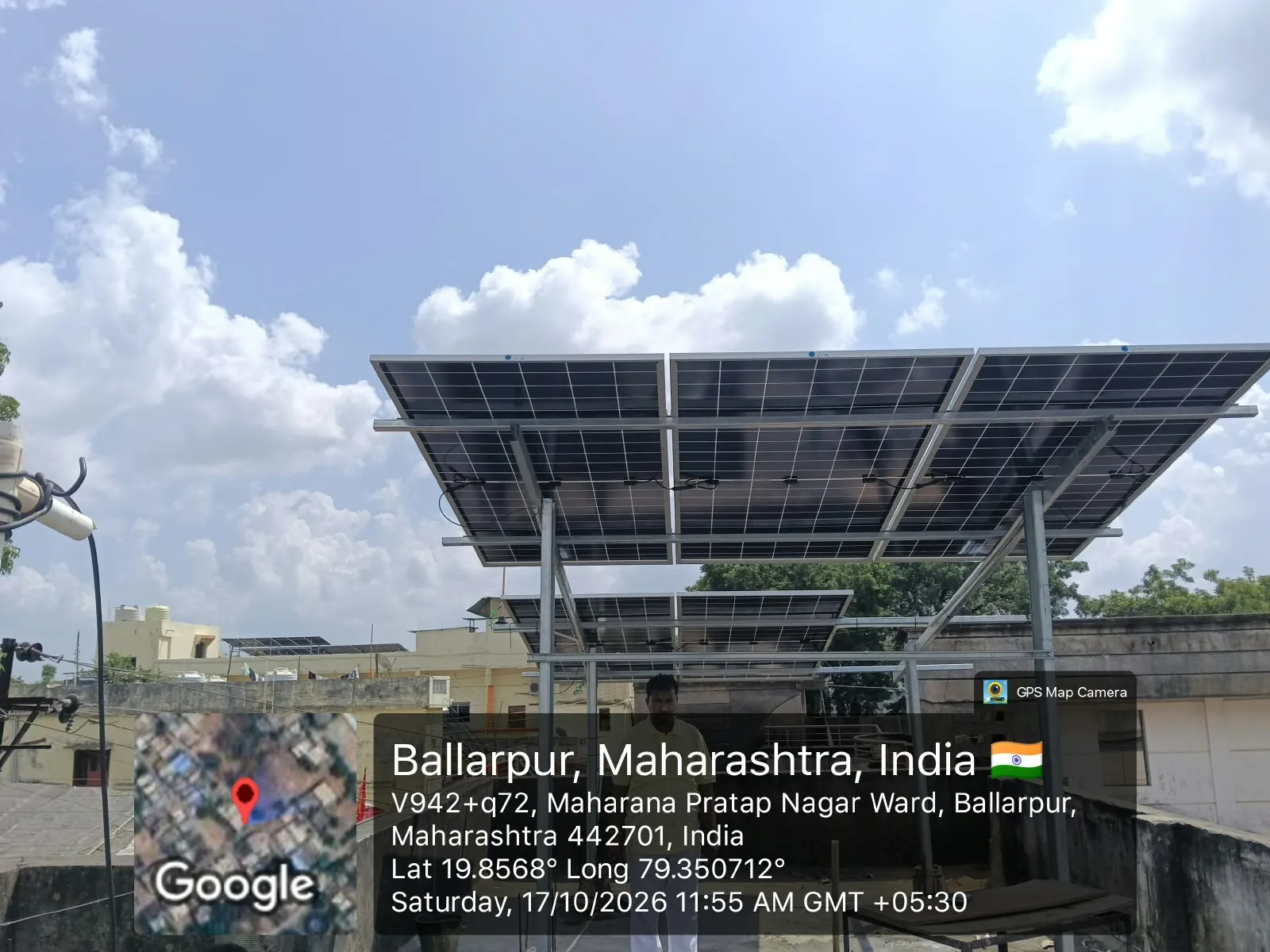
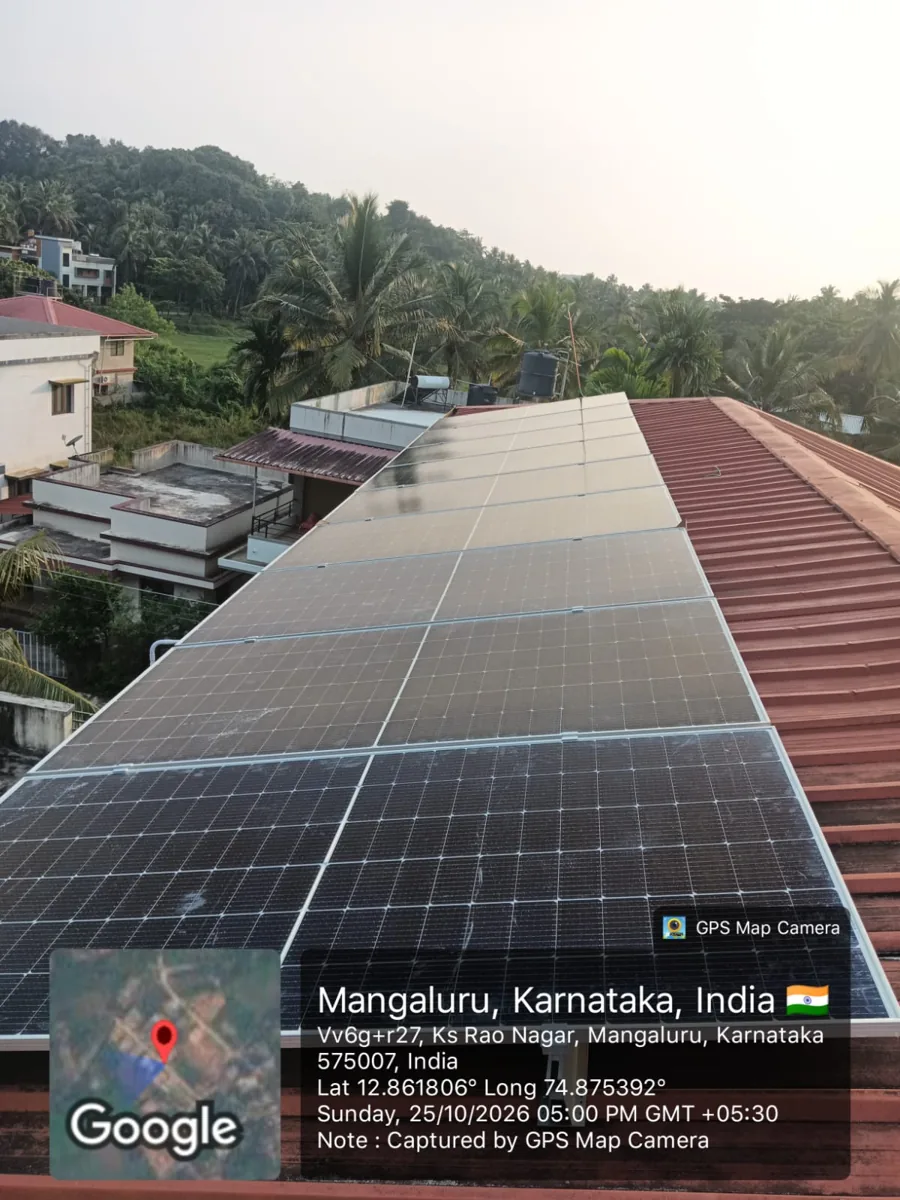
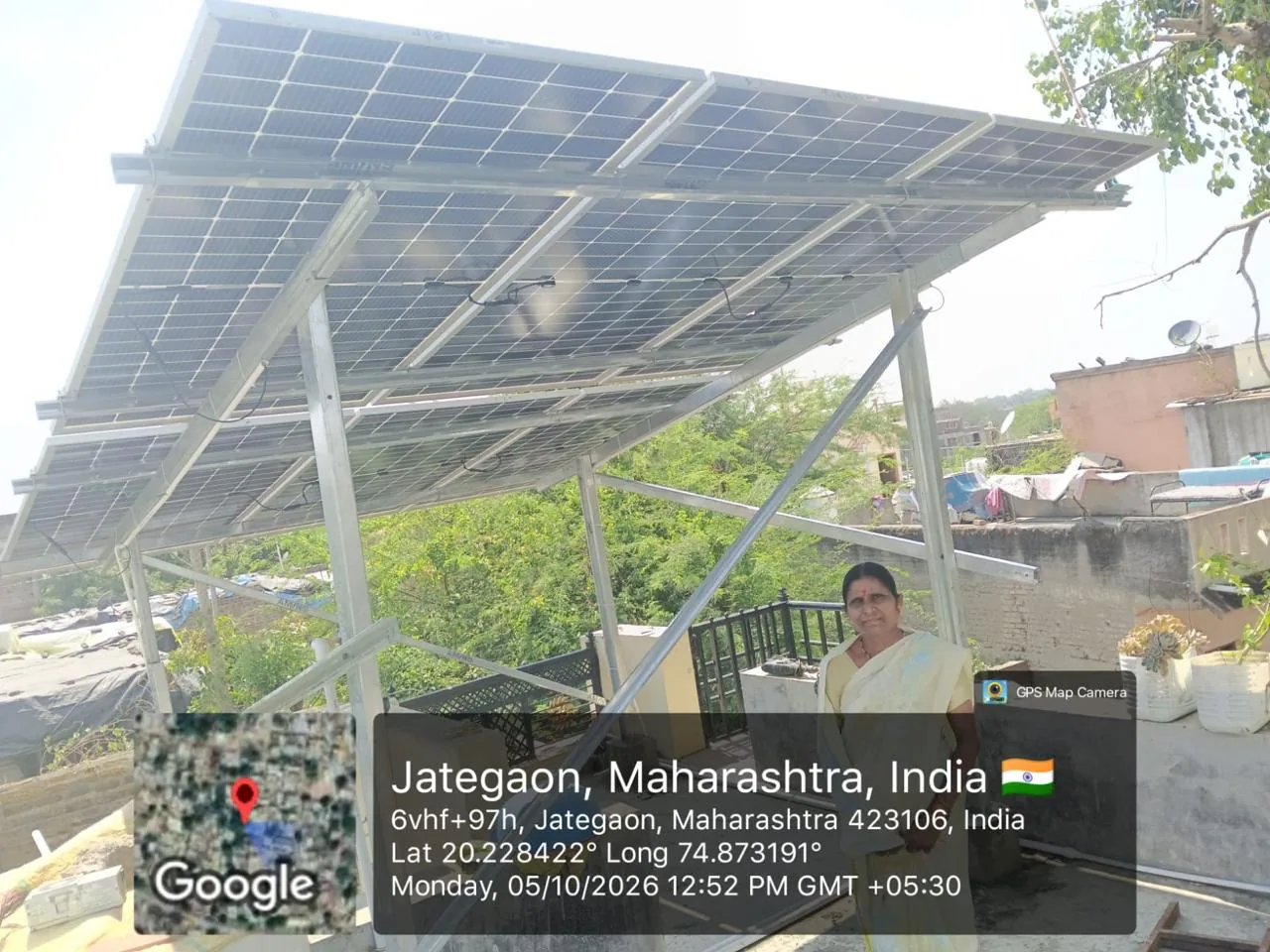
PROJECT PHOTOS
Solar installations on real rooftops.
See rooftop panels, mounting structures and equipment from the photographs you provided.